What kind of grass do I have?
Almost every lawn care decision — how short to mow, how much to water, when to fertilize — depends on your grass type. Care for tall fescue like it's Bermuda and you'll scalp it; feed Kentucky bluegrass on a Bermuda schedule and you'll mostly feed the weeds. Here's how to identify what's actually growing in your yard.
The fastest way: scan it with AI
Manual grass identification works, but it takes a hand lens and some patience. If you just want the answer, take a photo: an AI grass identifier compares blade width, color, sheen, and growth pattern against known species and names your grass in seconds — then tells you how to care for it.
Identify your grass from one photo
Lawn Care AI names your grass type, spots weeds and diseases, and builds a care schedule around the result. Free to download.
Step 1 — Narrow it down by region
Grass species split into two families, and your climate rules out half the candidates immediately:
- Cool-season grasses (Kentucky bluegrass, perennial ryegrass, tall and fine fescue) dominate the northern half of the US, Canada, and most of Europe. They grow fastest in spring and fall and stay green through cold winters.
- Warm-season grasses (Bermuda, zoysia, St. Augustine, centipede) dominate the South. They love 80–95°F heat, and they turn brown and dormant after the first frost — that winter browning is normal, not dead grass.
- The transition zone (roughly a band from the mid-Atlantic across to Kansas) can grow both; tall fescue and zoysia are the usual picks.
Step 2 — Look at blade, tip, and growth habit
Pull a few blades from a healthy patch and check three things:
- Blade width and texture. Needle-fine (fine fescue), medium (bluegrass, ryegrass, Bermuda), or wide and coarse (tall fescue, St. Augustine).
- Leaf tip. Kentucky bluegrass has a distinctive boat-shaped tip — pinch the tip flat and it looks like the bow of a canoe. Ryegrass and fescue tips are pointed.
- How it spreads. Dig up a small plug. Grasses that spread by underground rhizomes (bluegrass) or above-ground runners called stolons (Bermuda, St. Augustine) knit into a carpet. Bunch grasses (ryegrass, tall fescue) grow in distinct clumps that only thicken with overseeding.
The six most common lawn grasses
Kentucky bluegrass
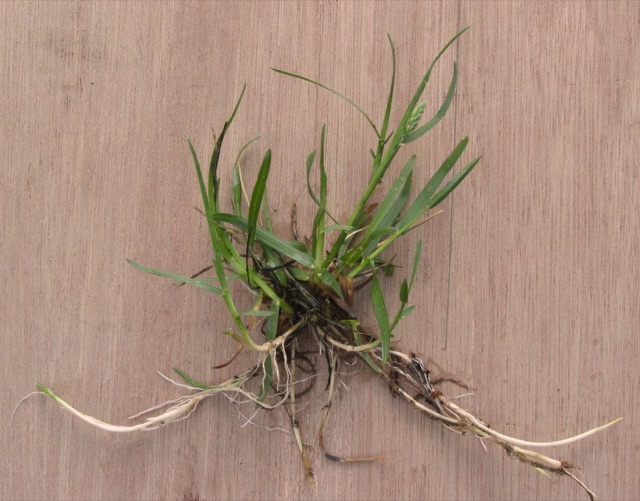
The gold standard of northern lawns: dense, dark blue-green, and self-repairing thanks to rhizomes. Look for the boat-shaped tip and a narrow, V-creased blade. It needs more water and feeding than fescue, and it goes dormant (brown) in summer drought rather than dying. Mow 2.5–3.5".
Perennial ryegrass
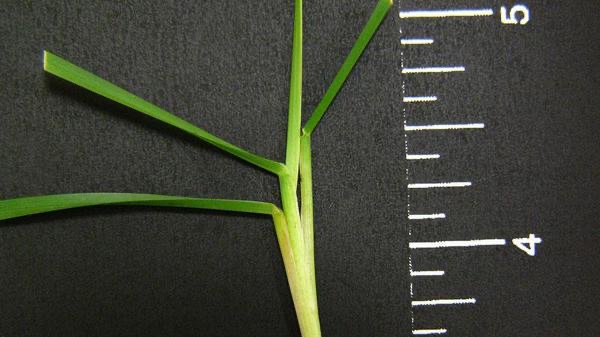
The sprinter — germinates in under a week, which is why it anchors most overseeding mixes. Fine pointed blades with a distinctly glossy underside and reddish base at the crown. Bunch-forming, so bare spots need reseeding. Mow 2–3".
Tall fescue
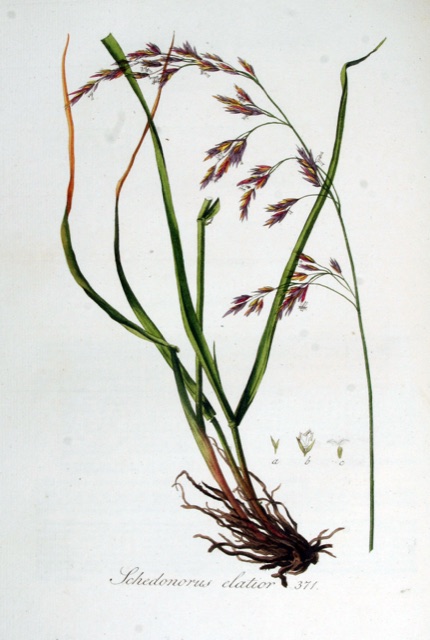
Wide, coarse blades with visible ribs on the upper surface and a bunching habit. Its deep roots make it the most drought- and heat-tolerant cool-season grass — the default choice in the transition zone. Mow high at 3–4" and it will shade out most weeds itself.
Fine fescue
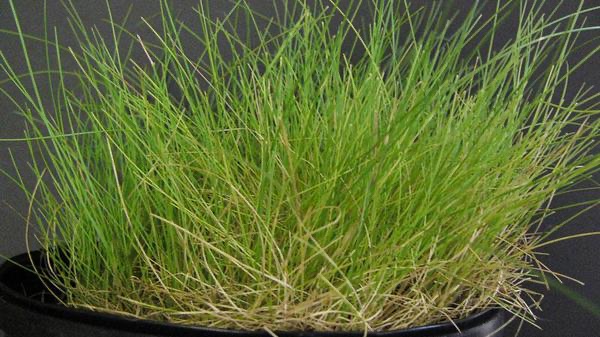
If the blades look like needles or wires, it's a fine fescue (creeping red, chewings, hard fescue). The shade-and-neglect specialist: it tolerates poor soil, low fertilizer, and deep shade better than any other lawn grass, but hates heavy traffic and soggy soil.
Bermuda grass
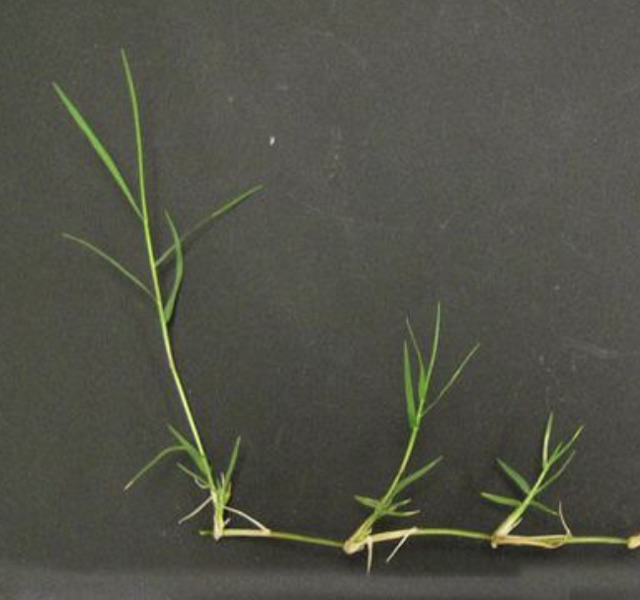
The South's favorite: fine-textured, gray-green, and aggressive, spreading by both stolons and rhizomes — you'll see wiry runners crawling across sidewalks. Full sun only. Mow low (1–2"), feed through summer, and expect straw-brown dormancy after frost.
Rough bluegrass
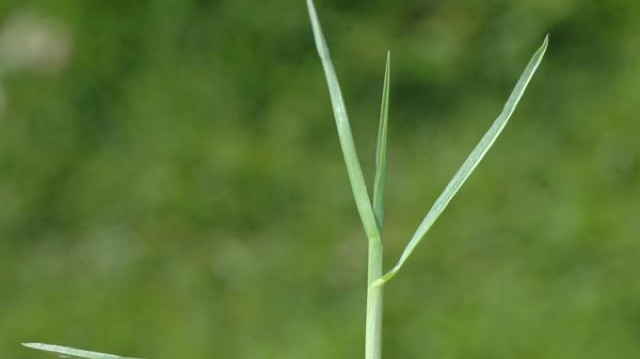
Bluegrass's shade-loving cousin: lighter, yellow-green color, glossy blades, and a shallow-rooted, stoloniferous habit. It thrives in damp shade where Kentucky bluegrass fails — then browns out fast in hot, dry sun. Often shows up uninvited as lighter patches in older lawns.
Quick comparison
| Grass | Season | Blade | Spreads by | Mow height |
|---|---|---|---|---|
| Kentucky bluegrass | Cool | Medium, boat tip | Rhizomes | 2.5–3.5" |
| Perennial ryegrass | Cool | Fine, glossy back | Bunch | 2–3" |
| Tall fescue | Cool | Wide, ribbed | Bunch | 3–4" |
| Fine fescue | Cool | Needle-fine | Bunch / weak rhizomes | 2.5–3.5" |
| Bermuda | Warm | Fine, gray-green | Stolons + rhizomes | 1–2" |
| Rough bluegrass | Cool | Fine, glossy, light | Stolons | 2.5–3" |
Grass identification FAQ
Can I identify grass from a photo?
Yes. AI grass identifier apps like Lawn Care AI recognize grass type from a single photo of your lawn by analyzing blade width, color, and growth pattern — much faster than manual identification, and accurate enough to build a care plan on.
What's the difference between cool-season and warm-season grass?
Cool-season grasses grow best at 60–75°F, stay green in cold climates, and grow fastest in spring and fall. Warm-season grasses thrive at 80–95°F, dominate southern lawns, and go brown and dormant after frost.
Can a lawn have more than one grass type?
Very often, yes. Most northern lawns are seeded with a blend — typically Kentucky bluegrass, perennial ryegrass, and fine fescue — so different patches of the same lawn can look and behave differently. Identify the dominant grass and care for that.